
Federal Judge Says Executive Order Blocking NPR, PBS Funding Violated the First Amendment

For decades, the U.S. government has provided funding to news organizations serving domestic and international audiences. In the past two years, however, President Donald Trump and Congress have taken steps to reduce or eliminate that funding.
Media organizations have responded to those cuts with lawsuits.
In March 2026, a federal district judge overturned a May 2025 executive order that had cut federal funding, including barring future funding, to National Public Radio, the Public Broadcasting Service and their member stations. The actual effect of the ruling may be minimal, however; Congress separately passed legislation that cuts the same funds, and the judge’s order did not affect Congress’ action.
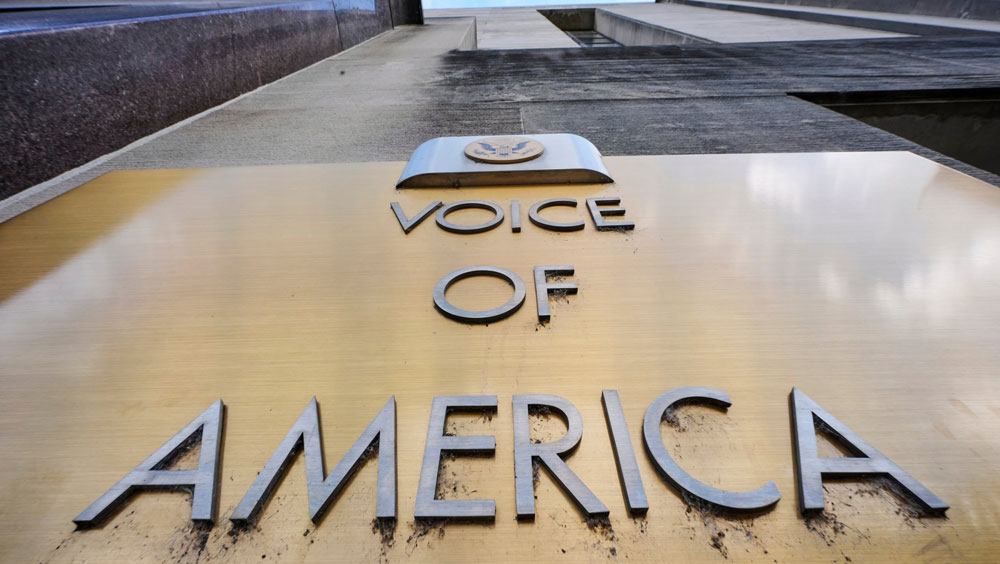
Meanwhile, international services funded by the government, including Voice of America, Radio Free Europe/Radio Liberty and Radio Free Asia, have also seen their federal funds cut under a different 2025 executive order and are similarly embroiled in federal court litigation.
Read on to learn more about current legal challenges in the landscape of government-funded media and how the First Amendment comes into play.
Current conflicts over government-funded media
Domestic media
In early May 2025, the Trump administration issued an executive order directing the Corporation for Public Broadcasting to stop providing federal funds to PBS and NPR, which affected funding for all their local affiliates as well. The order claimed that government funding of news media is “outdated” and that neither PBS nor NPR present “a fair, accurate, or unbiased portrayal of current events to taxpaying citizens.”
NPR and PBS challenged the executive order on First Amendment and other grounds. With regard to the First Amendment, the lawsuits alleged that the executive order placed illegal conditions on government funding by retaliating against NPR and PBS for expressing disfavored viewpoints in news coverage, interfering with editorial discretion and freedom of the press protections under the First Amendment.
“The EO smacks of retaliation for, among other things, perceived political slights in news coverage,” the lawsuit filed by PBS said. “That all transgresses the First Amendment's protection of both speech and freedom of the press.”
Following the executive order, Congress separately approved a recission package in July 2025, cutting funds to public media.
The CPB, which was responsible for distributing funds to NPR, PBS and their member stations, shut down in January 2026 because of the funding cuts.
In March 2026, U.S. District Judge Randolph Moss overturned the May 2025 executive order, ruling that the White House had unconstitutionally stripped and restricted funds from NPR and PBS because of the organizations’ protected speech.
In his ruling, Moss referenced a White House press release that announced the executive order. The press release, he noted, described NPR and PBS’ news coverage as “trash” with “zero tolerance for non-leftist viewpoints.”
“It is difficult to conceive of clearer evidence that a government action is targeted at viewpoints that the President does not like and seeks to squelch,” he wrote.
Moss’ order does not immediately restore federal funds to NPR and PBS. The court’s decision applied only to the executive order. It did not address Congress’ July 2025 action rolling back all federal funding to the organizations and their member stations. NPR and PBS, however, can still ask Congress to pass legislation to restore that funding.
In May 2026, NPR announced a round of layoffs and buyouts, citing the fallout from budget cuts.
Overseas media
In March 2025, the administration issued an executive order directing the U. S. Agency for Global Media to reduce funding to minimum levels.
USAGM oversees six U.S. broadcast networks that serve overseas audiences: Voice of America, the Office of Cuba Broadcasting, Radio Free Europe/Radio Liberty, Radio Free Asia, Middle East Broadcasting Networks and the Open Technology Fund.
As a result of the 2025 executive order, USAGM terminated funding to Radio Free Europe/Radio Liberty, Radio Free Asia, Middle East Broadcasting Networks and VOA, where employees found themselves locked out of the building the next day. VOA news programming was replaced initially by music and more recently by the feed from One America Network, a conservative, for-profit political TV channel. More than 600 VOA contractors and non-full-time employees were fired in the wake of the funding cuts, and more than 1,000 full-time employees were placed on paid administrative leave.
The media outlets and their employees filed several lawsuits in federal court, which resulted in an order that the government reinstate funding. A federal appeals court initially froze the money again but then reversed its own decision and ordered the government to release April 2025 funds to the outlets while the court continues to consider this case.
In July 2025, a federal district judge said that Radio Free Europe/Radio Liberty was entitled to receive all the money it was owed as part of its current fiscal year grant from the USAGM. This ruling was on administrative, not First Amendment, grounds; the judge ruled that because the USAGM had promised the money, it needed to pay it through September 2025.
In March 2026, that same judge ruled that Kari Lake, who Trump had selected to lead USAGM, was appointed illegally. The order voided Lake’s directives, including the mass layoffs at VOA. Later that month, an appeals court paused the lower court ruling, preventing the journalists from returning to work while that lawsuit is pending.
Following the March 2026 ruling, four VOA reporters joined with Pen America and Reporters Without Borders to file a new lawsuit arguing that the Trump administration had violated legal requirements ensuring the independence of the news outlet. The lawsuit argues that the administration’s actions in controlling VOA content not only violate statutory protections, but they also violate the First Amendment free press and free speech rights of VOA journalists.
What’s next?
As these cases continue to work their way through the courts, new developments are likely. It may be months before the cases are resolved.
Several cases remain open regarding international media. The outcome of those cases will determine what funding, if any, USAGM is able to provide to these outlets. It will also determine the future staffing of VOA and the level of control the administration can exercise over editorial decisions. Meanwhile, the individual outlets like Radio Free Europe/Radio Liberty and Radio Free Asia will continue to lobby Congress for restoration of their funding.
Kevin Goldberg is a vice president and First Amendment expert at Freedom Forum. He can be reached at [email protected].
Katie Bernard is a rapid response writer at Freedom Forum. She can be reached at [email protected].

Why New Utah Social Media Laws Are Unconstitutional
Watch: Can Government Officials Block You Online?
Related Content