
Sharon McMahon Disinvited From Giving UVU Commencement Speech: First Amendment Analysis
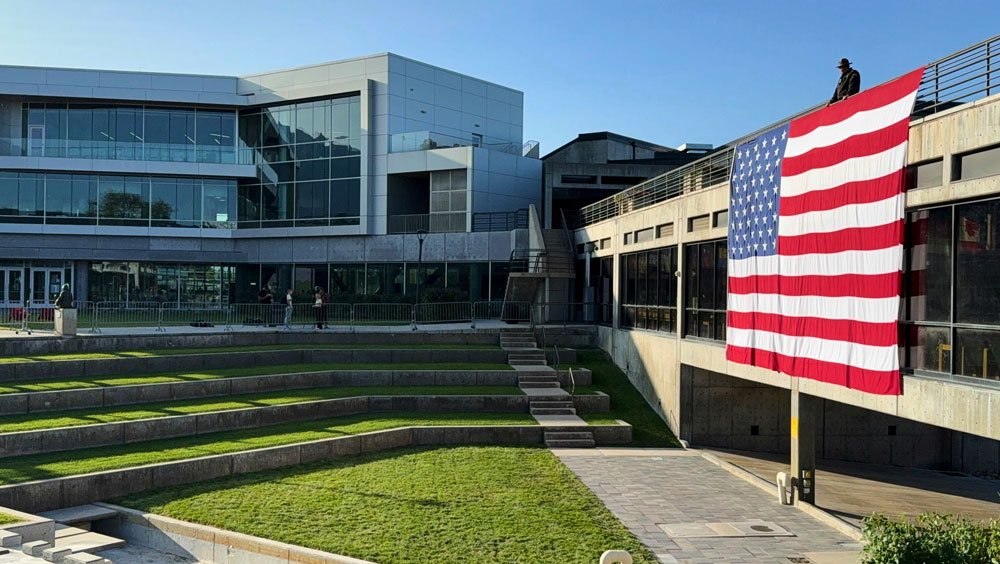
In March, Utah Valley University selected and invited Sharon McMahon, a former teacher turned author and podcaster focused on civic education, to deliver its 2026 commencement speech, with the university president calling her “a force for good.” In April, following criticism from state lawmakers, a U.S. senator and student groups, the university withdrew that invitation, citing “increased safety concerns.”
McMahon had posted to social media about activist Charlie Kirk in the days following his assassination last year, which occurred during an event at Utah Valley University. McMahon condemned Kirk's murder but also, in a social media post that has since been deleted, said some of Kirk’s rhetoric caused harm.
The campus chapter of Turning Point USA, the organization Kirk founded, called the decision to host McMahon on the campus where Kirk was shot “tone-deaf and disrespectful.”
The situation has raised First Amendment questions about what speech is and is not protected and how universities may respond to pushback against scheduled speakers. We answer those questions, and more, in this article.
First Amendment analysis of McMahon’s comments and UVU’s disinvitation
We’re looking at this incident through a First Amendment lens using a "traffic signal” framework:
 Green light: These words or actions are protected by the First Amendment.
 Yellow light: Caution! First Amendment protections might not apply.
 Red light: These words or actions have no First Amendment protection.
This analysis applies only to public colleges and universities, as they’re part of the government. Private colleges and universities, like other private entities, are not bound by the First Amendment.
Are McMahon’s posts following Kirk’s murder protected by the First Amendment?
Following Kirk’s assassination, McMahon created a social media post that cited Kirk’s own words to explain why some disagreed with eulogizing him.
In the post, which she later deleted, McMahon called Kirk’s murder “horrific.” She added that because of his words, “millions of people feel they were harmed” and his murder “does not magically erase what was said or done,” according to multiple reports, including from The New York Times and The Salt Lake Tribune.
The reports say McMahon wrote in her post that she wanted to contextualize why some disagreed with favorable eulogies of Kirk and cited direct quotes from Kirk to do so.
Green light: McMahon’s statements appear protected by the First Amendment.
The First Amendment is designed to protect as much speech as possible, including political speech and even controversial, hateful or offensive speech.
One of McMahon’s critics, Sen. Mike Lee, said McMahon had “defamed” Kirk. In a practical sense, McMahon is unlikely to be sued for defamation (a category of speech not protected by the First Amendment) because only the person claiming they have been defamed can file a lawsuit. In other words, Kirk’s supporters would have no legal pathway to sue on his behalf.
But even if Kirk were alive, courts would be unlikely to consider any of McMahon’s posts on the topic defamatory, especially those that restate Kirk’s own words; such a post would not be considered “materially and substantially false.”
Are calls for her removal and messages of support for her protected by the First Amendment?
State and federal lawmakers and student groups criticized the university’s decision to invite McMahon, with the UVU campus chapter of Turning Point USA saying they “firmly oppose” McMahon as commencement speaker.
McMahon’s fans responding to the cancellation purchased a digital billboard campaign along a Utah highway reading “We love Sharon McMahon.”
Green light: All of this is protected. Americans have broad free speech rights to say what they think, especially on political topics and other matters of public concern. They also have petition rights to ask the government, including public universities, to change something they don’t like.
Courts have said the best response to speech someone doesn’t like is to counter it with more, “better” speech. This is called the counterspeech doctrine.
What about the government officials who called for UVU to remove her?
Not all the backlash to McMahon’s commencement address came from private citizens. Sen. Lee posted to social media asking UVU to reconsider. State lawmakers called for the university to replace her or for McMahon to withdraw, and at least one lawmaker, Utah state Rep. Trevor Lee, posted to X that the state should withhold funding from UVU.
Yellow light: Government officials don’t give up their First Amendment rights when they’re elected to office, and the government itself may speak, advocate and attempt to persuade. However, officials might cross a line and lose First Amendment protection if they use their government positions to force an intermediary to restrict someone else’s First Amendment rights.
Is UVU’s decision to disinvite McMahon a First Amendment violation?
After the backlash, UVU officials disinvited McMahon and cited safety concerns.
Green/yellow light: Courts generally see K-12 commencement speeches as school-sponsored events akin to government speech, situations where the government is expressing its own message, rather than regulating others’ speech.
This means these educational institutions can exercise substantial control over who speaks and what is said. But courts haven’t weighed in on whether public university commencements specifically are school-sponsored events.
Public universities could justify exercising control over commencement speakers by arguing that the event is government speech, though this hasn’t directly been applied to a university commencement, either.
In a 2022 case, the U.S. Supreme Court found that when determining whether the government speech doctrine applies, it considers the history of expression for the event, the public’s likely perception of the speaker, and how much the government controls that expression.
Under that ruling, courts would likely find UVU is free to remove McMahon for any reason, assuming the school has, for example, historically decided who speaks at commencement and has exercised editorial control over those speeches, and assuming the public is likely to understand the person is speaking on behalf of the university.
If the event is not considered school-sponsored speech or government speech, the possibility of a First Amendment violation increases significantly.
UVU cited safety concerns when it canceled her speech. This could still violate the First Amendment if a court determined the commencement event isn’t a form of government speech. A First Amendment principle called the heckler’s veto prohibits government entities, which includes public universities, from silencing speakers or preventing them from speaking because of a crowd’s reaction or anticipated reaction, including safety concerns.
Are threats against McMahon protected by the First Amendment?
In an April 23 Instagram post, McMahon said the uproar over her commencement speech had resulted in “significant threats against the university and me.”
Yellow light: True threats, a serious expression of intent to commit violence against a person or group, are not protected by the First Amendment.
When determining whether speech is an unprotected true threat, courts consider factors like the speaker’s mindset, whether the speaker could follow through on a threat, and whether the speaker knew or should have known their words would put the listener in fear of bodily harm or death.
What’s the bottom line?
American universities have a long history of controversial commencement speaker invitations and canceled addresses.
UVU’s decision to disinvite McMahon is unlikely to raise First Amendment concerns, as the invitation is akin to government speech.
However, the First Amendment protects the widest possible range of discussion surrounding McMahon’s invitation, the backlash to it and her own statements about Charlie Kirk.
Sharon McMahon is a 2025 Free Expression Awards honoree. The Free Expression Awards is an annual Freedom Forum event that honors the achievements of those who have championed or celebrated free expression and the First Amendment in ways that have inspired others.
Katie Bernard is a rapid response writer at Freedom Forum. She can be reached at [email protected].
This article was compiled with contributions from Freedom Forum experts, including Vice President and First Amendment Expert Kevin Goldberg and First Amendment Specialist Alex Morey.

Trump Delays TikTok Ban: First Amendment Analysis, Next Steps

First Amendment Analysis of Minnesota’s Lawsuit Against DHS
Related Content
The more you know, the freer you are.
Learn about the First Amendment.