
Is Flying a Flag Protected by the First Amendment?
The First Amendment prevents the government from punishing or restricting speech, with some exceptions.
Freedom of speech extends well beyond the right to speak (or not), to include acts of expression such as writing books, creating art, wearing your favorite clothes and flying flags in your yard — or even burning one in protest.
Over the years, flag-flying has come to occupy a unique space in both the American free speech tradition and the First Amendment legal landscape. So when is flag flying fully First Amendment-protected, and when can it be limited?
Here, we’ll run those questions up the flagpole.
Is flying a flag protected by the First Amendment?
Generally, yes. But like all First Amendment freedoms, there are limits, and restrictions on flag flying can come from private entities or the government.
The First Amendment limits only government action, not that of private entities. So, a private business, private school or HOA prohibition on flying certain flags would not constitute a First Amendment violation.
For its part, the government may also restrict flag flying in some cases. Courts are most likely to uphold these restrictions if they are “content-neutral,” meaning they're not aimed at restricting the flag’s message.
These restrictions often take the form of time, place and manner regulations: limiting when or where flags can be flown, the flag’s size, or the number of flags in a certain area. The government often applies these kinds of restrictions to political signs and billboards as well, aiming to ensure public safety and/or aesthetics.

The government must apply these content-neutral restrictions to flags equally, rather than targeting particular flags with particular messages. This is called being “viewpoint neutral,” and failing to remain viewpoint neutral is one of the easiest ways for the government to violate the First Amendment.
Notably, the government may restrict flag flying in cases where the flag represents “government speech.” In other words, when the government is speaking for itself, the First Amendment doesn’t apply. This may occur with certain flags flown on government property — like at a state capitol building — especially when the government has made it clear it is controlling which flags are flown there.
When do flag-flying restrictions violate the First Amendment?
Under the First Amendment, political speech gets the highest level of protection, and any government attempt to restrict speech — political speech in particular — based on the message being conveyed must meet a high legal standard called “strict scrutiny.”
Individuals and businesses’ choice to fly flags could fall under this category of speech, since flags often represent political ideas.
A restriction on flag flying would likely violate the First Amendment if it shuts down all political speech broadly or if it involves viewpoint discrimination, which occurs when the government favors certain messages or speakers over others.
Also, if the government opens spaces on government property to outside organizations to fly their own flags, it cannot then restrict which flags are flown due to the viewpoint or message of the flag.
Recent examples of flag restrictions
Below are some other situations where flag restrictions happen. This section explores this topic from a First Amendment perspective, focusing on government, not private, prohibitions on flag flying or displays.
In national parks or state parks
Federal, state and local parks exist as public goods for everyone to enjoy. They often include scenic views and large expanses of recreational areas meant to preserve a sense of solitude or appreciation of wilderness. Accordingly, government officials who oversee parks can reasonably limit how flags, signs or other messages are displayed in these parks — without violating the First Amendment.
For example, leaving a large flag suspended from an overlook in a national park could result in criminal charges or a civil fine for violating general laws that might apply to anyone who defaces or obstructs public property, like drawing graffiti, taking historical artifacts or blocking a pedestrian route.
First Amendment-friendly limits are rooted in content-neutral concerns, like ensuring public enjoyment of and access to the parks, rather than censoring a particular message.
Real example:
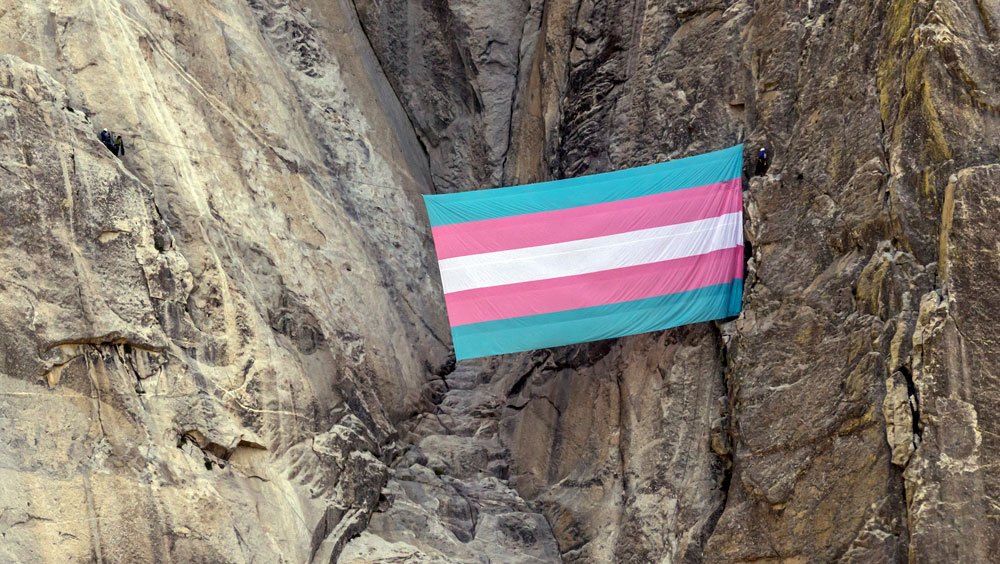
In May 2025, the superintendent of Yosemite National Park, one of the most visited parks in the country, restricted flags from being affixed to the park’s rock outcroppings and viewpoints. In 2024 and 2025, climbers had left large flags on the side of the famous El Capitan rock formation that displayed political messages, including “Stop the Genocide,” a transgender pride flag, and an upside-down U.S. flag, which is used as a sign of protest or distress.
The restriction did not amount to a First Amendment violation, as it was content-neutral, meaning it applied to all flags and was aimed at preventing damage to the landscape and ensuring the park’s natural beauty.
In August 2025, one of the climbers, who worked for the National Park Service, was fired from their position as a park ranger for “failing to demonstrate acceptable conduct.” That climber, Shannon “SJ” Joslin, had briefly hung up a transgender pride flag during their personal time, before park officials issued the new restriction on flags in that area. Joslin identifies as nonbinary and uses they/them pronouns.
Courts have said that public employers may regulate speech that is part of an employee’s official job duties, but that employees’ personal, off-duty speech generally receives greater — though not complete — protection. Such speech is protected by the First Amendment when it addresses matters of public concern and doesn't disrupt the workplace.
Joslin sued over being fired, alleging the federal government selectively targeted their protected speech because of the transgender pride flag’s message. In June 2026, a federal judge dismissed Joslin’s suit on non-First Amendment grounds, saying Joslin had to bring their case to a federal administrative agency. That agency is expected to make a final determination in August 2026.
At homes and private businesses
All state and local governments maintain a certain degree of regulation around private businesses and residential properties. These include zoning regulations and restrictions on how large signs and flags flown by businesses and residents can be and where they may be flown.
Perhaps you’ve seen a very large flag flying from a pole next to a freeway, marking a car dealership or similar business. The government could restrict flying a similarly large flag in a residential neighborhood, from a house, for example, for reasons related to public safety, aesthetics, interference with power lines, or encroaching on neighbors’ property. However, the restriction itself must be related to such a justification and must not be intended to prevent people from expressing themselves.
Remember: Homeowners’ associations are private, nongovernmental organizations that ask residents to agree to their rules before moving into the neighborhood. This is why HOAs can strictly regulate flag flying within their community without violating the First Amendment.
Real example:
Camping World, which sells RVs, trailers and similar vehicles, has faced several legal fights with local governments in California and North Carolina over flying a large U.S. flag at its locations. Local officials have cited the need for building permits and to comply with codes for displaying large banners, signs and flags. The company, with more than 250 locations nationwide, closed at least one store due to the fight and the fines imposed by local government.
At public buildings and schools
Although state and local governments such as cities and counties are legally separate entities, state legislatures can pass laws restricting what local governments and their employees can do with respect to flags.
The specifics of how and to what extent state governments can do this vary by state. But generally, states may restrict their local governments from flying certain flags outside city hall — for example, only allowing the U.S. and state flags — and public school teachers from displaying flags and similar banners in classrooms.
Real example:
In March 2025, Utah lawmakers passed a bill that bars flags other than the U.S. flag, state flag and several others from being displayed at government buildings and public schools. Opponents believed it targeted LGBTQ+ flags and pride symbols.
A city council member in Centerville, Utah, tested the limits of the law by placing a small rainbow pride flag on the dais in front of her during council meetings. The council member, Cheylynn Hayman, who is also a lawyer, said she believes the law applies only to government entities and school employees, not elected individuals. The Utah state auditor, who is charged with enforcing the law, has received complaints about Hayman’s flag.
“If the auditor’s office concludes that my individual display of a pride flag somehow constitutes a violation of the statute, I will pursue all legal remedies to protect my right to free speech,” Hayman told The Salt Lake Tribune in June 2026.
Flag flying and the First Amendment
Your right to free expression includes flying flags with any message you choose: to show your cultural heritage, support your favorite team or display your patriotism. While the government can place some restrictions on these displays, it can’t be because officials disagree with your personal expression or opinion rippling in the breeze.
So while your local city council member, who happens to be a University of Michigan alum, may not like that you have an Ohio State University flag in your yard, the city council cannot demand that you remove that flag specifically, or otherwise punish you for what teams you support — in sports or politics.
In other words: Your right to wave your team’s banner or fly your favorite flag with pride is brought to you by the First Amendment.
Scott A. Leadingham is a staff writer at Freedom Forum. He can be reached at [email protected].

15 Freedom of Assembly Examples You Should Know

Survey: Where America Stands on the First Amendment in 2023
Related Content