
First Amendment Rights in the Military

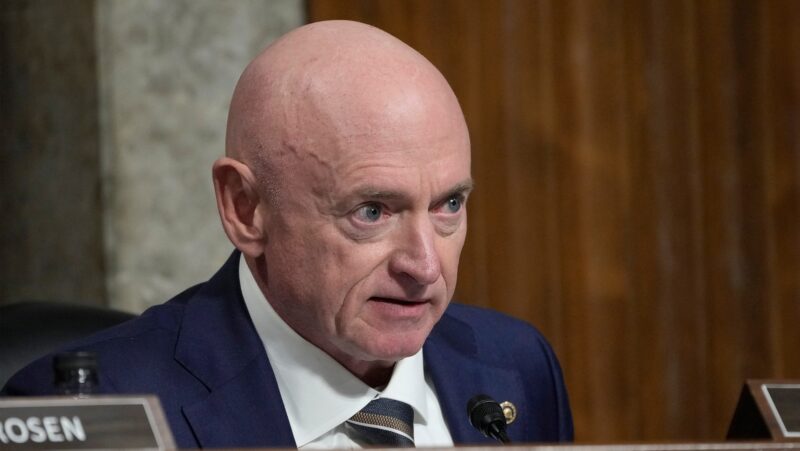
Arizona Sen. Mark Kelly, a retired Navy captain, was among a group of lawmakers in a Nov. 18, 2025, video posted online who said military members “can refuse illegal orders.”
President Donald Trump responded to the video, writing in a series of Truth Social posts that the lawmakers “should be ARRESTED AND PUT ON TRIAL,” and calling the comments “SEDITIOUS BEHAVIOR punishable by DEATH.”
On Jan. 5, Defense Secretary Pete Hegseth said he issued Kelly a formal censure and took steps to lower his retirement rank and reduce his post-retirement military pay, saying Kelly had violated military rules on “seditious” conduct that apply to active duty and retired members.
Kelly said he had the First Amendment on his side and sued, claiming the government retaliated against him for his protected speech.
On Feb. 12, U.S. District Judge Richard J. Leon temporarily blocked Hegseth’s actions against Kelly, writing that the government “trampled on Senator Kelly’s First Amendment freedoms.” He held that while courts recognize the military's authority to limit active-duty service member’s First Amendment rights, “no court has ever extended those principles to retired servicemembers, much less a retired servicemember serving in Congress and exercising oversight responsibility over the military.” The judge also held that Kelly’s speech related to “matters of public concern,” which the U.S. Supreme Court has said requires “special protection.”
On Feb. 24, the Justice Department said the Pentagon would appeal the judge's ruling.
Separately, on Feb. 10, a federal grand jury declined to indict the lawmakers, including Kelly, on charges brought by the Department of Justice.
The case has highlighted questions about the First Amendment rights of military personnel, both active duty and retirees.
This article broadly addresses those questions.
Editor’s note: This article does not examine Kelly’s case specifically but instead focuses on answering the general questions around the First Amendment rights of military personnel.
When can the military restrict service members’ First Amendment freedoms?
Service members can generally exercise their First Amendment freedoms without facing interference by nonmilitary law enforcement or government agencies.
However, military officials can much more strictly limit these freedoms for service members — regardless of whether members are on or off duty — including by imposing disciplinary action or punishment.
The Supreme Court expressly recognized this authority in 1974, holding that the military operates in a “specialized society separate from civilian society,” with a separate system of justice and a distinct criminal code governing service members.
This separate system is outlined in the Uniform Code of Military Justice. The UCMJ covers all aspects of legal issues for military members, not just those related to First Amendment freedoms. Some UCMJ rules apply only to officers; most apply to all service members.
Courts give the military much more leeway than civilian (nonmilitary) government officials when it comes to limiting service members’ First Amendment freedoms. Instead of having to meet a strict legal test, the military only has to show a restriction is connected to an important military goal or interest, and that a service member’s actions — like their personal speech or wearing of religious clothing — could interfere with that interest.
Courts have identified several military-specific interests that justify restricting service members’ freedoms, including the need for loyalty, good order, discipline, morale, obedience, unity, uniformity, unit cohesion, commitment and national security.
Many of these restrictions would likely violate a nonmilitary member’s First Amendment freedoms. But federal courts, including the Supreme Court, have generally sided with the military when questions about service members’ First Amendment rights prompt legal challenges.
In other words: While the military isn’t totally unlimited in its ability to restrict service members’ First Amendment-protected freedoms, it can impose far greater restrictions than other parts of the government.
What about retired military personnel?
The Supreme Court has held that retired members of the military remain a part of the armed forces, and lower federal courts have indicated that retired members of the military are subject to military discipline as long as they have a “formal relationship with the armed forces that includes a duty to obey military orders.”
Many military rules and restrictions affecting service members’ First Amendment freedoms also apply to retired members. For example, a UCMJ rule applying to both active-duty and retired officers criminalizes “contemptuous words” toward the president, vice president, secretary of defense and other high-level positions.
However, in a February 2026 email to Freedom Forum, Eugene Fidell, a military law expert and senior research scholar at Yale Law School, said that to his knowledge, this rule “has never been applied to a retired officer.”
Fidell also noted that Defense Department policy on partisan political activities only applies to active-duty members.
Some experts and lawmakers have advocated limiting how the UCMJ rules apply to retired service members. That would likely require changing federal law, as the Congressional Research Service explained in 2023.
U.S. military personnel and the five First Amendment freedoms
Here’s how the five First Amendment freedoms apply in the military.
Freedom of religion
The First Amendment protects freedom of religion by guaranteeing the government cannot mandate a single religion or prohibit people from practicing their chosen faith — or no faith at all.
A Defense Department policy recognizes, “Pursuant to the Free Exercise Clause of the First Amendment to the United States Constitution, Service members have the right to observe the tenets of their religion or to observe no religion at all.”
However, it also notes the military can restrict expressions of faith for certain reasons, such as the need for “military readiness” and “unit cohesion.”
An example of the military denying a religious accommodation request involved a Jewish Air Force officer who wore a yarmulke while testifying in a military court martial. After being ordered to remove it to adhere to military regulations, the officer sued, claiming the regulations violated his First Amendment rights. But in 1986, the Supreme Court ruled in favor of the military and its “need for uniformity.”
The next year, Congress passed a law that narrowed the military’s ability to restrict religious apparel if military members wear them in a “neat and conservative” way that doesn’t interfere with their duties.
Freedom of speech
Under the First Amendment, freedom of speech goes beyond speaking. It includes personal expression like music, clothes, signs and more.
Military regulations may restrict members’ speech and expression in ways that would likely violate the First Amendment if imposed on civilians.
For example, the UCMJ prohibits speech and other actions for some or all service members if that activity is deemed disobedient, contemptuous, or harmful to order and discipline, or if it “bring[s] discredit upon the armed forces.” The military also imposes restrictions around political speech and partisan political activity.
Over the years, various court cases have weighed questions of how First Amendment free speech protections apply to service members. For example, during the Vietnam War, Army 2nd Lt. Henry Howe joined an off-base protest out of uniform, carrying a misspelled sign that read, “LET’S HAVE MORE THAN A CHOICE BETWEEN PETTY IGNORANT FACISTS IN 1968” and “END JOHNSON’S FACIST AGRESSION IN VIET NAM,” both referencing President Lyndon B. Johnson. Howe was court-martialed under a UCMJ rule for using “contemptuous words,” and a higher military court ruled against him, saying the UCMJ rule did not violate the First Amendment.
Freedom of the press
The First Amendment generally prohibits the government from restricting the press or requiring prior review of publications. These protections extend to anyone who publishes or posts information — printed, broadcast or online — not just journalists at established news outlets.
Service members have some free press rights, but military regulations more strictly regulate what and how service members can publish online and elsewhere.
This came up during the Afghanistan and Iraq wars, which began in 2001 and 2003, respectively. Use of online communications and military blogs became popular, with service members publishing online while based in the U.S. and deployed overseas. .
The military responded by tightening regulations on how members could publish online, given the need for “operational security” and protecting sensitive information.
Freedom of assembly
The First Amendment protects peaceful assembly and the right to gather for protest or discussion. It also includes the right to associate with people of like minds and interests.
Military regulations may limit service members’ assembly rights. For example, one regulation restricts all members’ participation in demonstrations and protests and involvement with government-defined extremist groups.
Several cases have challenged these regulations, although courts have generally sided with the military.
In a 1969 case, enlisted men at a South Carolina Army base were not allowed to have a public meeting to peacefully discuss the Vietnam War. A federal district court upheld the restriction, finding the gathering was aimed at stirring opposition among other service members and potentially influencing U.S. involvement in the war.
Freedom of petition
The freedom of petition includes more than just signing a petition to a public official. It includes any action seeking government response or policy change: writing to a member of Congress, speaking at a city council meeting or asking a court to hear your case.
Individual military members may petition Congress and other public officials for change without having their petitions reviewed by their superiors. However, military regulations and court cases have limited “collective petitions” circulated on base and give more leeway to service members’ superiors to review them before they’re submitted.
In 1980, the Supreme Court upheld this practice in two cases:
- Brown v. Glines involved a petition challenging Air Force grooming standards.
- Secretary of the Navy v. Huff involved a petition to members of Congress by Marine Corps members stationed in Japan. The petition concerned various overseas deployment issues.
In both cases, the court ruled in favor of the military. It said while individual members could sign petitions on their own and contact members of Congress, members’ superiors could require prior approval for group petitions circulated on base.
The bottom line on First Amendment rights in the military
Service members have First Amendment rights, but courts and Defense Department policy have reiterated the need for uniformity, order and discipline.
This means military rules can sometimes restrict service members’ First Amendment freedoms, even when those restrictions would violate the First Amendment when imposed on civilians’ rights.
Scott A. Leadingham is a staff writer at Freedom Forum. He can be reached at [email protected].
This article was compiled with contributions from Freedom Forum experts, including Vice President and First Amendment Expert Kevin Goldberg and First Amendment Specialist Alex Morey.
Sen. Mark Kelly vows to fight for First Amendment amid Pentagon threats

First Amendment Stories to Watch in 2026
Related Content