
Kash Patel Sues The Atlantic: First Amendment Analysis
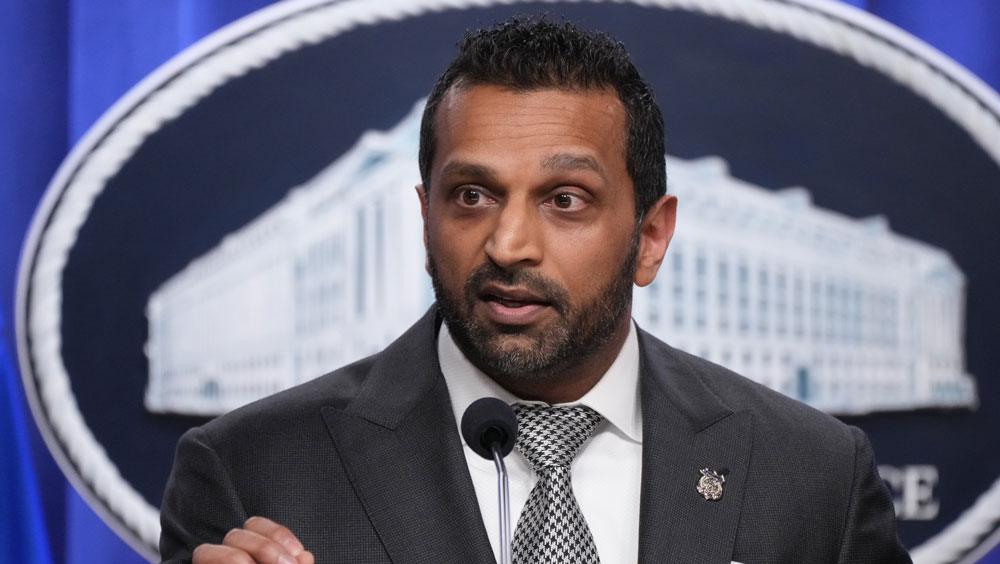
On April 20, FBI Director Kash Patel sued The Atlantic and one of its reporters for defamation, after the magazine published an article describing concerns from unnamed sources about Patel’s alleged erratic behavior and the impact this has on his job.
The article, which published April 17, cited more than two dozen anonymous sources and reported that Patel was prone to “bouts of excessive drinking,” had frequent “unexplained absences,” was “paranoid” about his job security and “prone to jumping to conclusions.” White House officials, the article said, are discussing potential replacements for Patel.
Such behavior, The Atlantic reported, had left sources concerned Patel was a “threat to public safety.”
Patel argues in the lawsuit that The Atlantic has “crossed the legal line by publishing an article replete with false and obviously fabricated allegations designed to destroy Director Patel’s reputation and drive him from office.”
In an April 20 statement to The New York Times, a spokeswoman for The Atlantic stood by the reporting.
“We will vigorously defend The Atlantic and our journalists against this meritless lawsuit,” the statement said.
Last year, Patel also sued an MSNBC analyst who said the FBI director was spending more time at nightclubs than at FBI headquarters. On April 21, a federal judge dismissed that case, finding that the analyst’s comments were “rhetorical hyperbole” that a reasonable viewer would not have taken as fact. Patel has the right to appeal the ruling.
What are the First Amendment issues in Patel’s lawsuit?
Patel’s lawsuit says that The Atlantic defamed him and is seeking $250 million in damages.
Defamation, which means false statements that harm someone’s reputation, is not protected speech under the First Amendment.
But in order to avoid chilling free speech and press rights, state laws define defamation, and courts interpret this definition, very narrowly. A person bringing a defamation lawsuit must prove several elements, and the bar is even higher when that person is a public official like Patel.
To win his case, Patel must prove that:
- The Atlantic published statements about him that are assertions of fact rather than statements of opinion.
- Those statements are materially and substantially false.
- The Atlantic is at fault for those false statements.
- The claims about him were made with actual malice.
- The article damaged his reputation.
Statements of fact vs. opinion
Patel must prove that The Atlantic article made false assertions of fact rather than unverifiable statements of opinion.
Patel makes several claims as to how the article misstates facts, but not all are likely to be considered assertions of fact by a court.
One assertion of fact that Patel cites as false is that he was “known to drink to the point of obvious intoxication” and that on several occasions, Patel’s security detail “had difficulty waking” him. It also details specific events, including an April 10 episode, when the report says Patel “frantically” called aides because he believed he had been fired.
These are statements that can be verified as either true or false through witness testimony or written documentation such as internal FBI memos or emails.
The article also describes the opinions of various sources. For example, the lawsuit points out that The Atlantic cites sources who claim Patel’s alleged alcohol abuse “has become a threat to public safety,” including in the context of “a domestic terrorist attack,” and constitutes a “national-security vulnerability.”
A court would need to determine if this is an assertion of fact because what constitutes a “threat” or “vulnerability” might be too difficult to objectively confirm or deny.
Proof of falsity
As the person filing a defamation lawsuit, Patel must prove The Atlantic’s reporting is verifiably false in a material and substantial way, meaning the magazine didn’t just make a minor error; it published false information that could dramatically alter readers’ perception of Patel.
In the lawsuit, Patel cites more than a dozen statements he claims are false, including many regarding his alleged drinking and how it may have negatively affected his performance at the FBI.
He says these facts are "demonstrably and obviously false, or easily refuted.” He presents his own facts in response to each statement and cites other administration officials who have also denied these statements.
Competing views as to the truth of reported facts exist in every defamation lawsuit. It is up to a judge or jury to decide whether Patel’s claims prove The Atlantic’s reporting was objectively untrue based on the evidence presented.
The evidence that the court will likely find most persuasive will include witness testimony and written evidence like emails, memos and other communications. Patel references such evidence in his suit. He also makes statements that reductions in crime during his time with the FBI prove he has been successful in the role and, therefore, contradict The Atlantic’s reporting. Courts typically find such claims less persuasive.
Actual malice
Even if a judge or jury finds that The Atlantic’s reporting is false, Patel is a public official and must also prove that the magazine and its reporter acted with actual malice.
Actual malice, a key standard applied to public officials and public figures, requires the person filing the defamation lawsuit to prove the defendant (in this case, The Atlantic) published the statements despite knowing they were false or recklessly disregarded the possibility that those statements were false.
Patel’s suit argues that actual malice exists in this case because, among other things, the magazine gave the FBI just two hours to comment for the story and published even after receiving a pre-publication letter from the FBI asking for more time to respond and refuting the claims with “publicly available counter-evidence.”
The suit also points to the anonymous sources cited in the article as evidence of actual malice, claiming the reporter relied on individuals with “axes to grind.”
“The totality of these circumstances reflects a purposeful avoidance of the truth. Defendants did not simply fail to check facts. They received a detailed pre-publication letter and emails identifying those facts and ignored it. They received a request for additional time to respond and denied it,” the suit said.
Although it doesn’t identify any specific policies, it also claims The Atlantic “violated their own internal policies and procedures on journalistic integrity to ensure the Article went to press before a responsible editor could reject it” and that the magazine “willfully, wantonly, and maliciously” sought to harm Patel’s reputation.
A judge or jury will have to determine whether The Atlantic published despite serious doubts about this reporting. This likely requires evidence related to the subjective mindset of the reporter and editors involved, including what they knew and believed while reporting and whether they followed their own standard processes.
However, publishing in the face of denials by the subject of the story is not considered actual malice, as subjects often issue denials.
Courts have also repeatedly ruled that simply using anonymous sources doesn’t prove actual malice.
Finally, Patel claims The Atlantic relied on anonymous sources with “known motives” to defame him. However, as the federal judge who dismissed President Donald Trump’s lawsuit against The Wall Street Journal noted, “ill will” or “malice” are not the same as “actual malice,” though it may be used as evidence that a defendant had a particular motive to intentionally or recklessly publish a false statement.
Damages
For a statement to be considered defamation, it must harm the reputation of the person filing the lawsuit.
Patel states that the article damaged his reputation and demands $250 million in damages. To win the case, he must demonstrate, in addition to all the other required elements of defamation, that the article actually caused him reputational or financial harm.
Reporter's privilege
A side note from this case involves The Atlantic’s reliance on anonymous sources in its article.
Because the truth or falsity of the reporting and, particularly, the existence or nonexistence of actual malice rely on what The Atlantic learned from anonymous sources, the magazine may be asked to reveal the identity of those sources and have them testify in court.
This is where reporter’s privilege comes in.
Reporter’s privilege protects journalists from having to testify in court about the identity of an anonymous source and/or information received from that source.
However, the U.S. Supreme Court held in 1972 that this privilege is not First Amendment-based. Reporter’s privilege exists because state legislatures have passed laws protecting it, and courts have explicitly recognized its existence. The privilege has been recognized by a court or established by state law in Washington, D.C., and every state but Wyoming.
The Atlantic may argue its journalists have reporter’s privilege, but that argument may be difficult to sustain; Patel filed his case in federal court, and there is no federal law recognizing that privilege. Federal courts in the District of Columbia, where this suit was filed, have recognized a “qualified” privilege, which leaves an opening for the court to order The Atlantic to reveal its sources.
What happens next?
The Atlantic will have an opportunity to respond to Patel’s lawsuit. It may ask a judge to dismiss the case.
If a judge allows the case to continue, then both sides will have time to investigate and build their cases, including by exchanging key documents and interrogating witnesses under oath. This could result in Patel attempting to force the anonymous sources to testify in court, or The Atlantic could ask those sources to come forward.
Alternatively, Patel and The Atlantic could decide to settle the case outside of court.
Katie Bernard is a rapid response writer at Freedom Forum. She can be reached at [email protected].
This article was compiled with contributions from Freedom Forum experts, including Vice President and First Amendment Expert Kevin Goldberg and First Amendment Specialist Alex Morey.

1A in Action: 13 Women’s Rights Activists Who Embodied the Power of the First Amendment
1A in Action: Joe Kennedy and Fighting for Religious Freedom on the Field
Related Content
You have the right to express yourself IRL.
